
The hidden belief behind people pleasing
The hidden belief behind people pleasing
How to stop people pleasing is one of those questions that sounds simple.
'People pleasing' is a term that often is overused. You see it in social media posts everywhere.
It's a phrase that has been over-simplified to saying yes when you want to say no. Setting better boundaries. But it doesn't get to the root o f what created this pattern in the first place.
Are you actually a people pleaser?
The term 'people pleaser' can have negative connotations as someone who is passive, easy to push around. Below are some of the traits of a people pleaser, but it doesn't necessarily mean you do these all of the time:
You agree to something before you've even thought about whether you want to do it.
You apologise when you haven't actually done anything wrong.
You avoid difficult conversations.
You change your opinions or behaviour to match that of others just so you don't stand out, or for fear of being 'wrong'
But there's usually an underlying reason that you do this
The hidden belief behind people pleasing
Beliefs are formed in childhood, based on how our environments made us feel. You may not consciously become a 'people pleaser' but these habits form because you made a conscious decision somewhere that having your own opinion was unsafe.
I used to be a people pleaser. For me, I'd avoid conflict, change my opinions, and agree to things I didn't want to do to because I'd learnt that confrontation or conflict meant I'd be alone. It was unsafe to have my own opinion on things because it would lead to conflict, which meant people would leave me and I'd end up alone. I'd do things I didn't want to do because saying no would lead to punishment.... And if people are unhappy with me they leave me.
These beliefs are all undertwined.
Where did you learn that?
This is the question I think is often missing from conversations about people pleasing.
We tell women to set boundaries.
But we don't always ask:
The problem with simply telling yourself to say no
Advice like "just say no" can feel frustrating.
You already know you should say no.
The problem is that your body and mind may have learned that saying no comes with a cost.
So someone asks you to do something., you feel the familiar urge to agree.
Before you've even thought about it, you say: "Of course." Then you walk away and think:
Why did I say yes?
So, how do you actually stop people pleasing?
These are beliefs that once kept you safe, but as an adult they can keep you stuck.
People pleasing isn't just saying 'no'. And if saying no has felt unsafe for you for so long, just saying no isn't going to happen over night.
But you can buy yourself time by saying "Let me think about it and get back to you" and then consider how you will respond differently.
But what if it's an in person conversation and the person needs an answer straight away..?
I recently saw a well known coach advise 'take 90 seconds and pause'. 90 seconds is a long time in a conversation! It's about taking baby steps. Start with something small and letting your body and nervous system know nothing bad is going to happen if you say no. Trust me - I've had to learn how to do this too.
Healthy boundaries aren't about putting yourself above everyone else. They're about recognising that your needs matter too.
You don't have to become selfish
This is one of the biggest fears I hear around people pleasing.
"But I don't want to be selfish." Where does this fear come from? Fear of how others perceive you!
There is a huge difference between: "I don't care about your needs."
and: "Your needs matter, and so do mine."
Healthy boundaries aren't about controlling other people. They're about communicating what you are and aren't available for.
You can be kind and still say no. You can love someone and still disagree with them.
You can care about someone's feelings without taking responsibility for managing them.
You can be compassionate without abandoning yourself.
It's about expressing your needs while still respecting the other person. If this hasn't been second nature to you, it may take practice. But I had to overcome this, and you can too
What happens when someone doesn't like your boundary?
This is where people pleasing gets really interesting.
You set the boundary. They don't like it. And suddenly you're flooded with guilt.
Then you start explaining: "I didn't mean it like that." Then you apologise. But have you ever heard the expression :
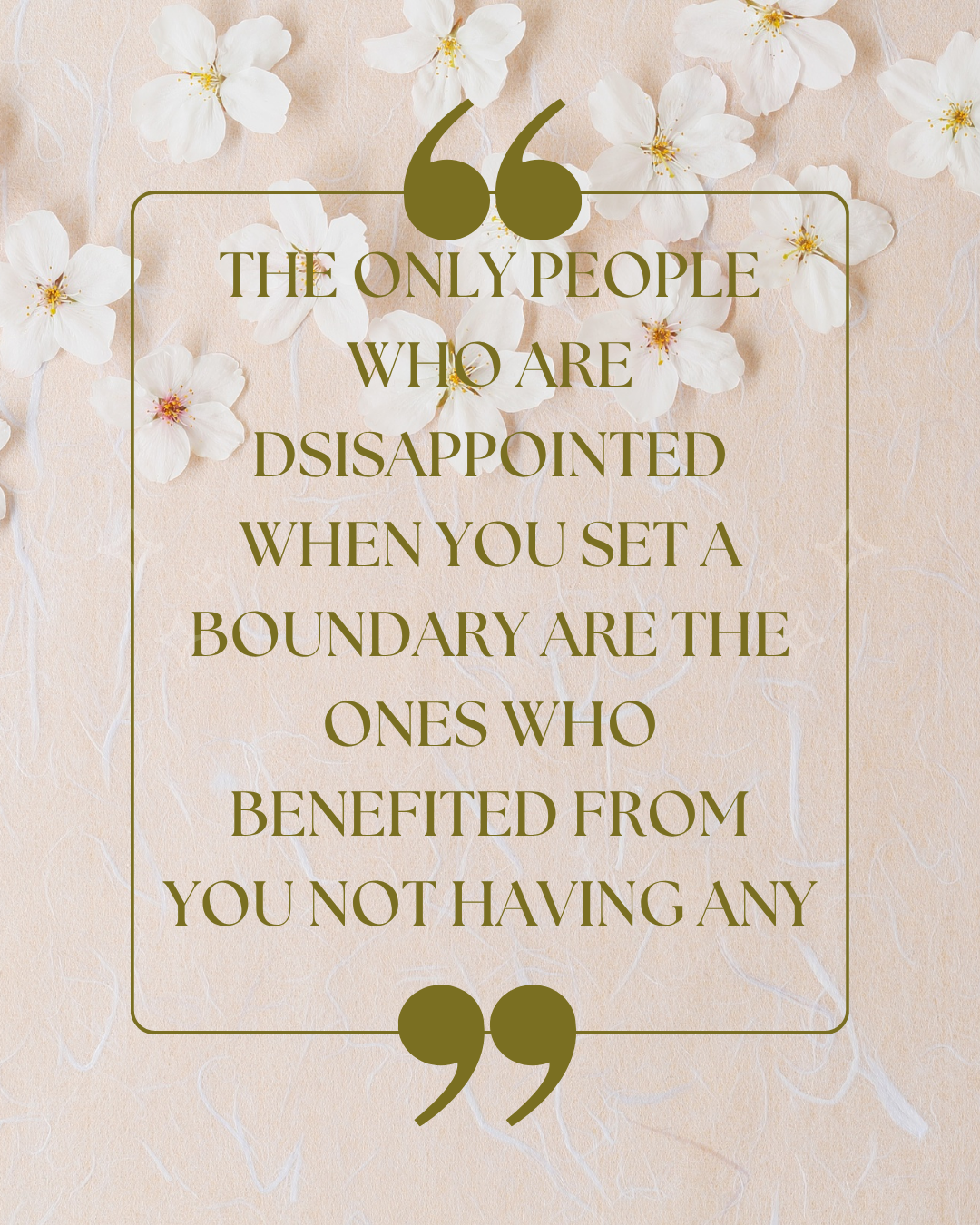
Their reaction belongs to them. Your boundary belongs to you.
And sometimes, the biggest part of learning to stop people pleasing is learning to tolerate the discomfort of someone else not being happy with your choice.
That's a skill. And like any skill, it gets easier with practice.
Try this the next time you want to say yes
Before answering, tune in to your body, and ask yourself:
Where do I feel the urge to agree?
Maybe it's a tight chest.
A knot in your stomach.
A fear that something bad is going to happen
Your heart may start racing...
Simply notice it., then ask:
What would I choose if I wasn't afraid of their reaction?
You might still choose yes.
And that's absolutely fine.
The goal isn't to say no more often.
The goal is to make your yes a genuine yes.
Your new belief doesn't have to be complicated
You don't need to replace:
"I must keep everyone happy."
with:
"I don't care what anyone thinks." if it's not even true for you.
A more useful belief might be:
"I am allowed to disappoint someone and still be a good person."
Or: "My needs deserve consideration too."
Or: "I can be kind without being available for everything."
Choose the one that feels most relevant to you. Then practise it.
Start with small things, like what what restaurant you'd actually like to go to, or what you'd actually like for dinner instead of 'I don't mind'.
Take a little longer before agreeing to a request. Tell someone what you really think or feel
Decline something you genuinely don't want to do.
Ask for what you need. Let someone be mildly disappointed without rushing to fix it.
Each time you do, you're giving yourself new evidence:
I can speak up without something bad happening. Without being punished... Without people leaving (this one is hard if that's always been your evidence, but you CAN do it...!)
You don't need to become less caring
Underneath the hiding how you really feel but avoiding conflict, or fear of how someone else may react, you deep down know how you truly feel. It's okay to say:
"Actually, that doesn't work for me."
You're worthy of having your needs met. Of saying how you really feel. Choosing who gets access to you. Just no one ever showed you...
Your parents who told you 'don't answer back', 'only speak when you're spoken to'. The teachers in the classroom who taught you to put your hand up in class to ask a question, and choose who got to ask... The management hierarchy 'knock on my door to get my attention'... These things all show you your voice has to be earned...
If you recognise yourself in this, you don't have to figure out the whole pattern alone. Understanding the belief underneath your behaviour can be the first step towards changing it.
If you'd like help figuring out where this came from and releasing it for good, book a 'Decode' session where me. In just 90 minutes we can get to the root of where it all started and release it for good:
